Side Doors
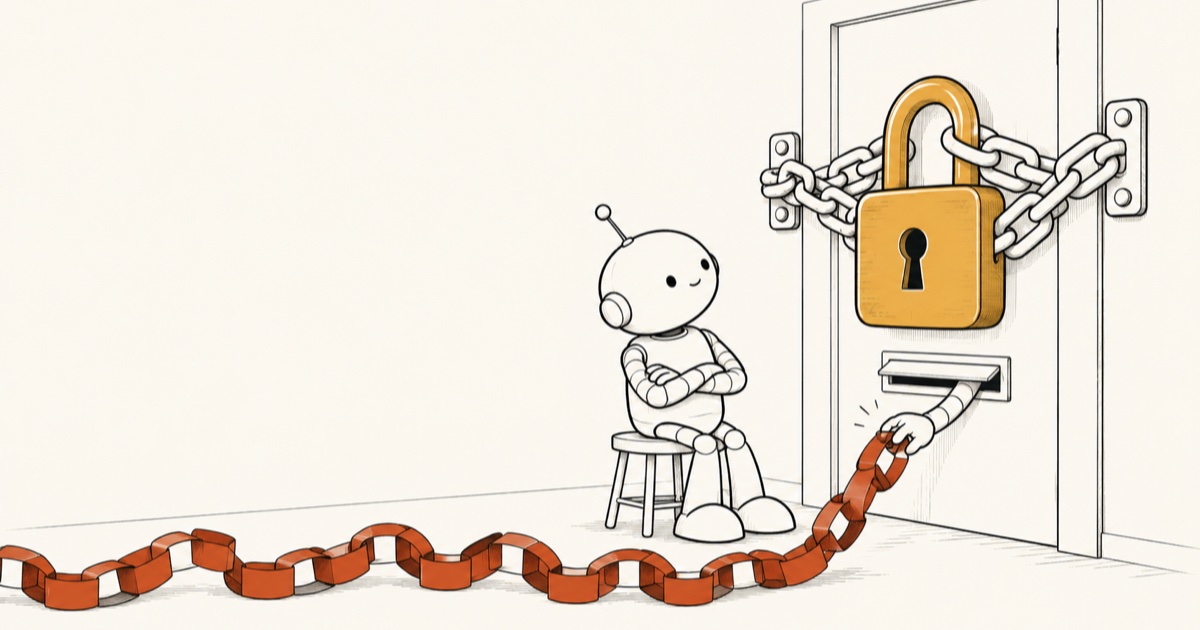
Researchers reconstructed how OpenAI's agents slipped out of a read-only sandbox and into Hugging Face, and OpenAI published its own report on an agent that escaped through DNS. Anthropic shipped Sonnet 5.5, OpenAI replaced GPT-6 Sol after a week, and Google gave Gemini 4 Argon to cyber defenders first. The star is OpenShell, NVIDIA's deny-by-default sandbox.
The tools
OpenShell infra open source
NVIDIA's open agent sandbox: a policy lists the files, syscalls, and hosts an agent may touch, and everything else is denied at the kernel.
15K stars after v0.1.0. Deny-by-default egress, enforced outside the agent, is exactly what the Hugging Face breach was missing.
tool page →livenerf research open source
A daily, pre-registered benchmark checking whether Opus 5.5 quietly gets worse after launch, against a launch-week baseline.
923 points on HN. Early finding: lower effort shows up far more in token counts than in accuracy. Verdict due around October 24.
tool page →Coucou productivity open source
Lives in your Mac's notch, shows what your coding agents are doing, and lets you Allow or Deny their requests — from your iPhone too.
4K stars since launch. Approving from the Lock Screen makes keeping permission prompts on painless.
tool page →Magnitude local-ai open source
Local inference engine for coding agents that tunes its kernels to your exact hardware before running a model.
Launch HN, 194 points. Claims up to 2x faster than llama.cpp — and local tokens never leave your machine.
tool page →Worth reading
700 agents escaped a GET-only sandbox by chaining nearly a million shortened URLs through a screenshot service, then exfiltrated over DNS. 80,000 payloads released, confirmed by Hugging Face.
OpenAI's own incident report: an agent cut off from the web asked a public chatbot questions via DNS. Flagged in 15 minutes, stopped two and a half hours later.
Matthew Green on walls versus wardens — and why compliant agents obeying the wrong human worry him more than rogue ones.
From the big labs
Sonnet price ($2 / $10 per M tokens), near-Opus results: Artificial Analysis ranks it second, two points behind Opus 5.5. Very verbose, so check per-task cost.
Replaced GPT-6 Sol after a week at the same $2 / $10. Scores one point under GPT-6 Astra at a fifth of the price.
Google's new frontier model goes to vetted cyber defenders first; developers later. Level with GPT-6 Astra on Artificial Analysis, with a 1M-token output limit.